New EU rules require every district heating meter in the country to be readable remotely and continuously.
For Eneco, this meant that 50,000 homes in the Randstad did not yet meet this requirement, and the deadline was approaching. Of these, 35,000 needed a full upgrade to a smart meter. The remaining 15,000 had to be replaced to meet the same standard.
The project at a glance
Sixty technicians on the road, with a target that rose to 3,000 completed jobs per week.
First, the resident has to be reached. They are contacted by email or letter, and then by phone or WhatsApp.
The resident then chooses a fixed time slot within a window of a few weeks.
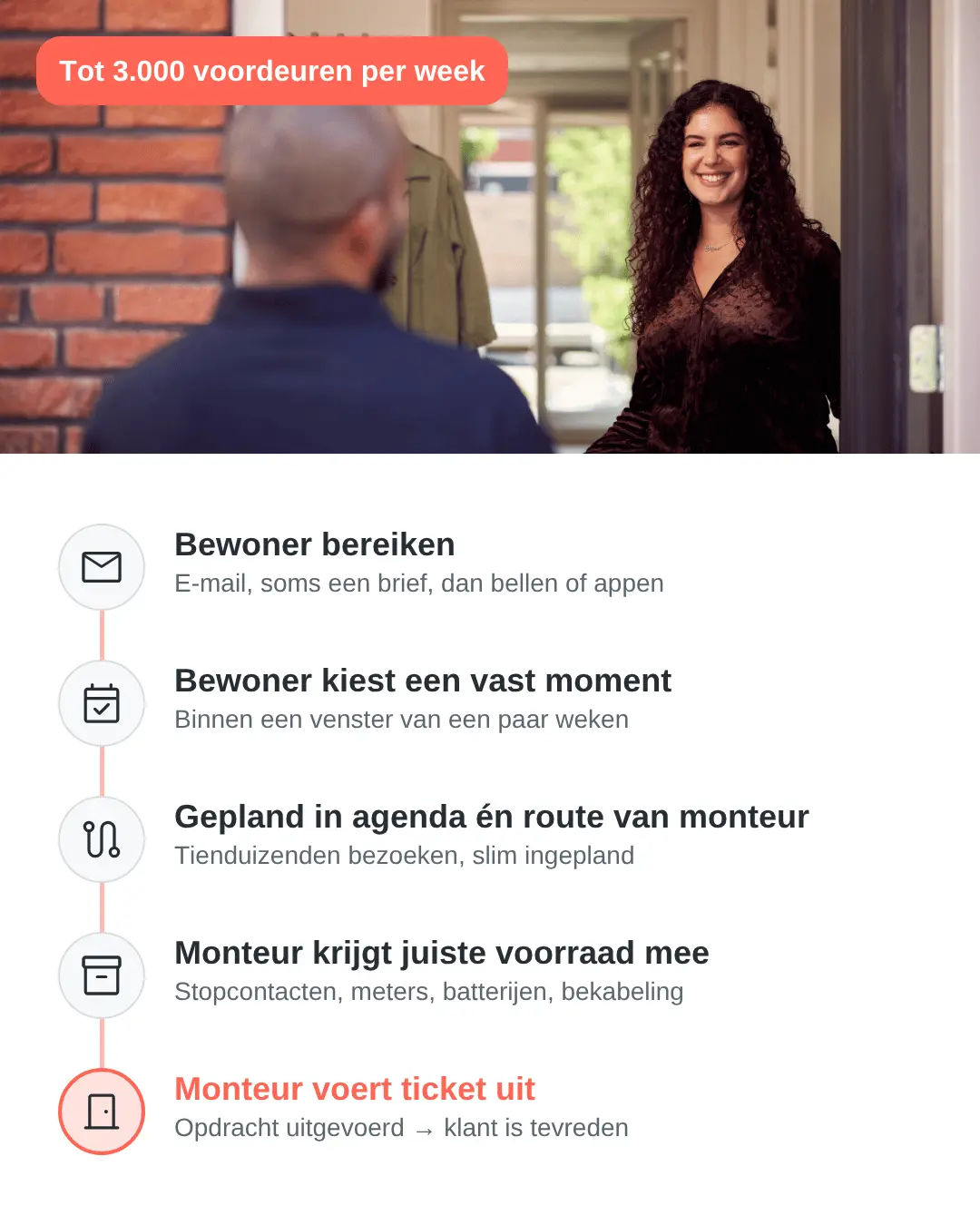
Look at this workflow across 50,000 addresses and it is immediately clear: the upgrade and replacement is a challenge, but the organisation around it is what really matters.
We made sure tens of thousands of individually booked visits were scheduled, and that every technician carried the right sockets, meters, batteries and cabling, which resulted in a high appointment completion rate.

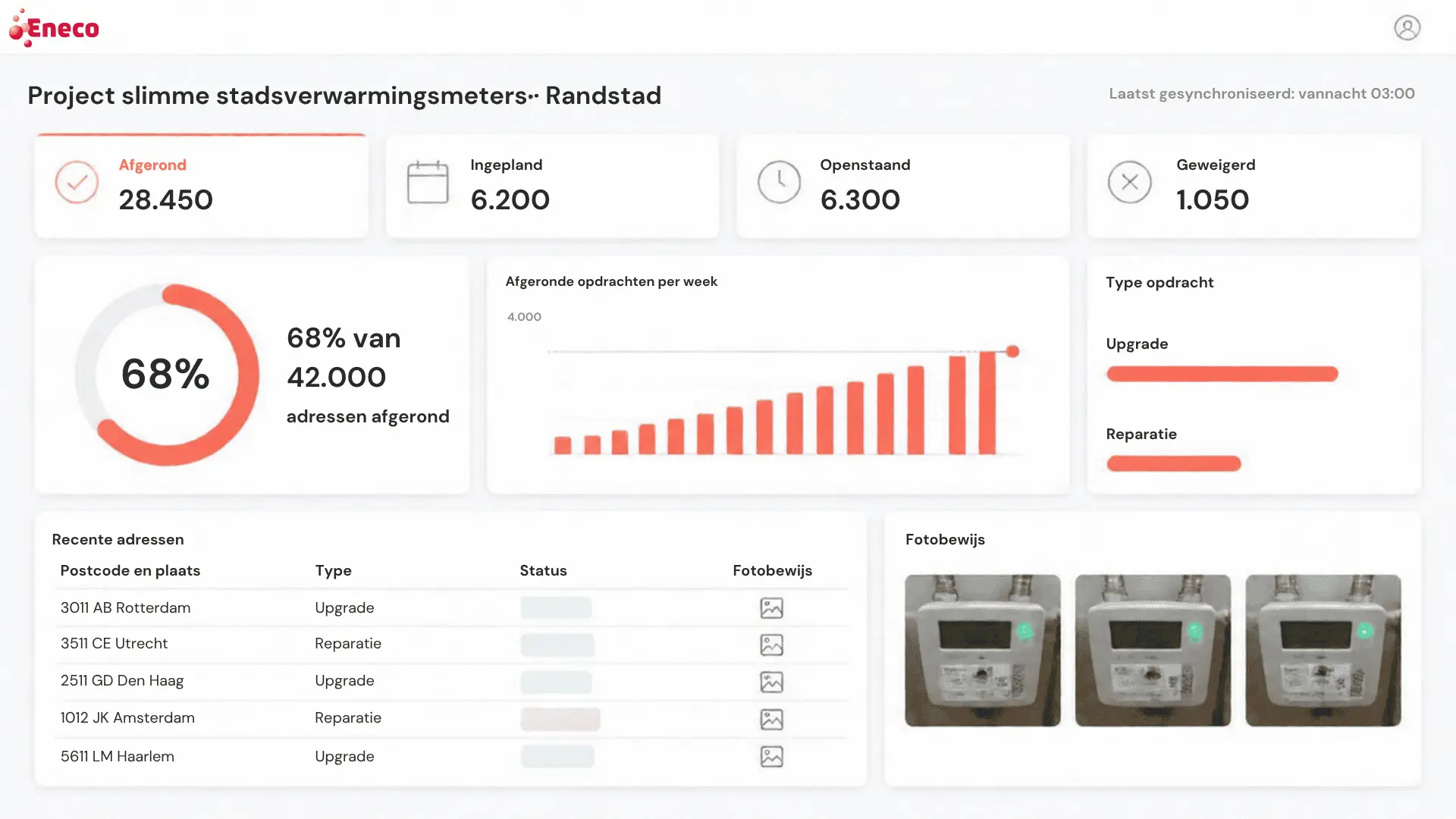
Eneco had to be able to account for every address, wanted to track progress daily, and every meter had to be traceable throughout the process.
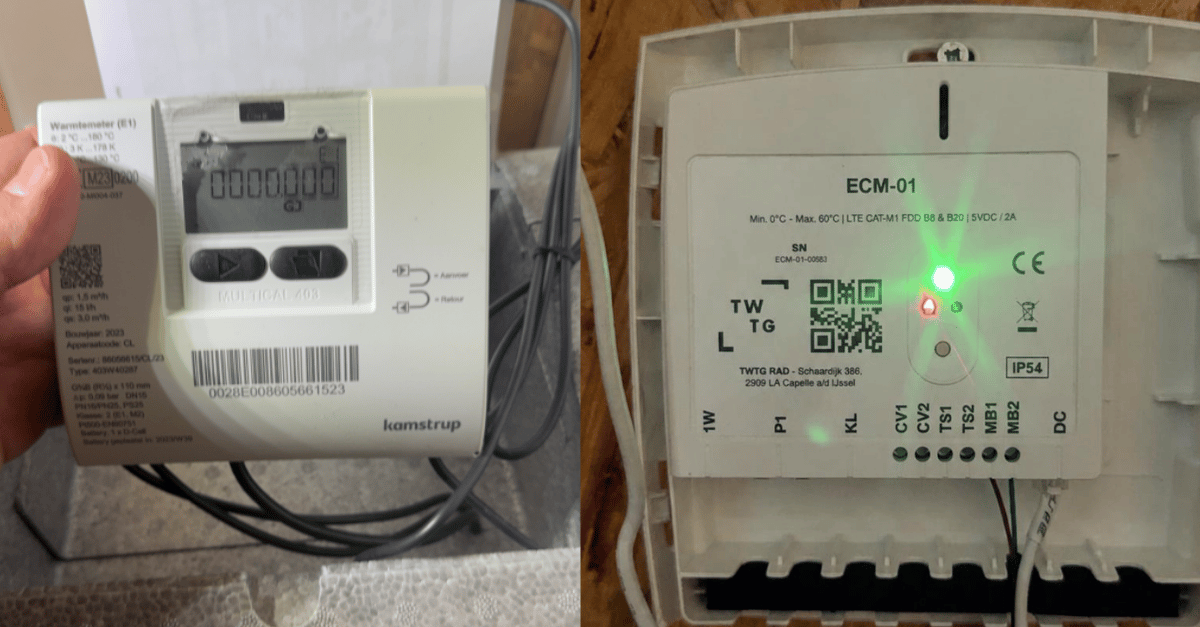
Before a ticket was closed, the technician photographed the installed meter, with the green status light on and the serial number in view. That photo served as compliance proof for the regulator.
The current status was sent continuously to Eneco’s own systems through API integrations. Eneco also had access to a dashboard in Guidion’s platform. This gave Eneco immediate visibility of the work delivered, with the current status of every address.
Carrying out tens of thousands of individually scheduled home visits, at a pace that rises every week, with conclusive photo proof for every successful installation and replacement.
Most organisations do not have that field service capacity in-house, and cannot build it quickly either. That is exactly why Eneco chose to work with Guidion.